Black Butte (Glaze Meadow)


Course Review
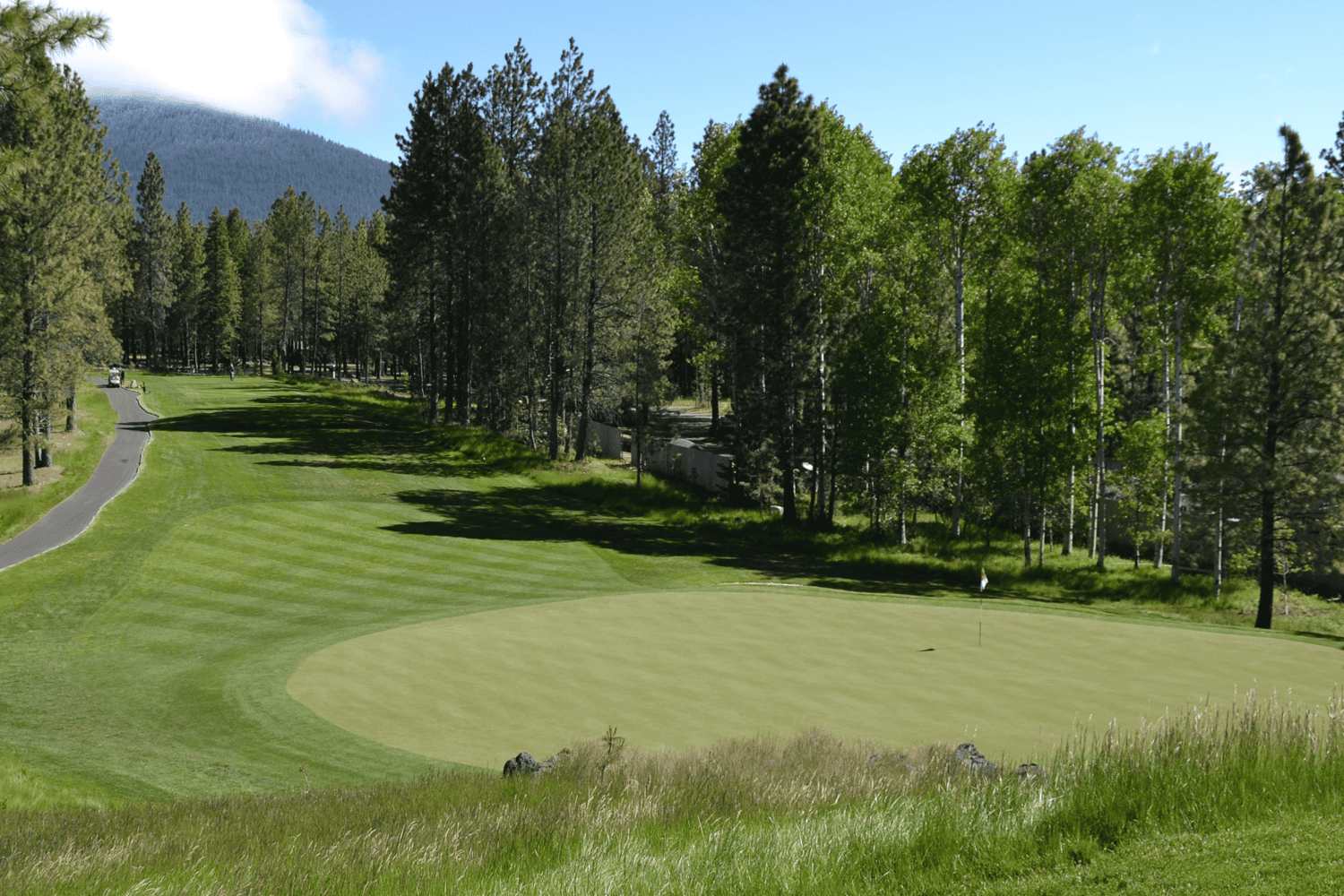
Glaze Meadow Golf Course, one of two layouts within the 1,800-acre Black Butte Ranch, sits beautifully among the rolling foothills of the Cascade Mountain Range, just seven miles west of Sisters along Highway 20. Originally opened in 1982, the course has long been known for its classic design and narrow, Ponderosa pine-lined fairways.
A comprehensive renovation led by former PGA Tour player turned architect John Fought elevated Glaze Meadow into a modern yet timeless test of golf. Completed in 2012 following a $3.75 million remodel, the project introduced all-new greens and tee complexes, enhanced bunkering, and restored native meadowlands—creating a distinctive playing experience while preserving the course’s original character. Fought, a Portland native, is also known for his work at Centennial, The Reserve’s South Course, and Langdon Farms.
Beyond aesthetics, the rebuild modernized the course’s infrastructure with updated irrigation and drainage systems. Strategically, two key changes define the new Glaze Meadow: widened landing areas off the tee and the addition of perched greens that fall off sharply at the edges while remaining receptive to ground approaches from the front. Select tree removal further improved playability without sacrificing the course’s natural forest setting.
The front nine now features a striking stretch from holes 2 through 5, where wetlands come into play on nearly every shot. These visually stunning hazards demand thoughtful strategy, often requiring forced carries and precise targeting. Exposure to wind in this section adds another layer of challenge.
While the course continues to mature, the quality of the new turf and greens is already evident. Combined with the revamped, grass-faced bunkers filled with pristine white sand, Glaze Meadow delivers a polished and memorable playing experience. Attention to detail throughout ensures that both casual players and seasoned golfers will find plenty to appreciate—and plenty to test their game.
⸻
Playing Glaze Meadow
The front nine opens with three approachable holes that offer early scoring opportunities. The downhill first hole favors accuracy over power, with a right-sloping fairway that penalizes misses toward the trees. The par-5 second rewards a straight drive with a chance to reach in regulation, though its large, sloped green demands a precise approach. The short par-4 third emphasizes positioning, where simply finding the fairway is key—especially in the wind.
Fought’s design introduces directional bunkering beginning on the fourth hole, guiding players toward ideal lines while punishing overly aggressive play. The fifth is as visually striking as it is demanding, requiring a well-placed shot to the heart of the green. A challenging putting surface awaits on the sixth, where long putts can be deceptively difficult.
The par-5 seventh again rewards smart navigation using the bunkers as guides, while the par-3 eighth offers a clear opening to the green from the front right—miss elsewhere at your peril. The uphill ninth closes the front side with a demanding tee shot and a green best approached from the left.
The back nine offers a balanced mix of three par 3s, 4s, and 5s, each presenting unique challenges. The par-5 tenth requires restraint off the tee, favoring positioning over distance. Club selection is critical on the par-3 eleventh, where elevation and slope complicate the shot. The twelfth, one of the longest par 5s in the Pacific Northwest, is a true three-shot hole, with a green that falls away at the back.
Precision is essential on the par-4 thirteenth, while the fourteenth demands confidence over an intimidating expanse of sand. The fifteenth challenges players off the tee with a sloping fairway, rewarding those who can hold the right side. The sixteenth, a favorite of Fought’s, flips its former design—what was once trouble left is now the ideal target line.
The par-3 seventeenth is both scenic and straightforward with proper club selection, setting up a demanding finishing hole. The eighteenth requires a well-placed drive to avoid fairway bunkers, followed by a precise downhill approach to a subtly elevated green—making for a strong and memorable finish.
In addition to the complete rebuilding of its infrastructure which includes modern irrigation and drainage systems, two major changes to the course were made with John Fought’s new design. The widening of landing areas off the tees as well as new perched greens that drop off along the edges yet are open to shots running up the front of them are vital updates to this 30 year old course. The removal of large trees that originally made some tee shots awkward were made with great attention to keeping the courses distinct Aspen forest setting. Most of the expanding of fairways and rough areas were made on the second nine. These holes have limited changes to their original design, but golfers that have played the course previously will be delighted with the more spacious layout that leads to much more forgiving play off the tees.
The front nine now includes a stretch from holes 2-5 that incorporate beautiful wetlands that can be seen on nearly every shot. The renewal of these areas has pleasantly created distinct views that differ from the remainder of the course. Golfers will be challenged to play forced carries and strategically aim for safe landing areas in order to avoid these natural hazards. This more open part of the course is vulnerable to high winds adding to the difficulty of the design. Similar to any brand new golf course all new greens and a majority of the fairways lined with new turf will cause this course to take a bit of time to mature. The high quality in these areas is already evident in how they play, and soon the fairways and greens on the Glaze Meadow golf course will be world class. With an all new and more challenging bunker design on every hole, even the most experienced golfers will have plenty to worry about on most shots. The grass faced bunkers at the new Glaze Meadow match the rest of the course in quality. They are all filled with pristine white sand and well maintained throughout the course. Attention to details such as these lead to a very enjoyable and memorable playing experience at Glaze Meadow.
Playing Glaze Meadow
The front nine at Glaze Meadow begins with three very manageable holes that lead to great birdie opportunities. The first hole plays downhill and does not require driver from the front tees. The fairway slopes heavily to the right so do all you can to avoid the trees on your right side from blocking your approach. The view from the back of the first green is a great photo opportunity as well as a chance to see what lies ahead on the 3rd and 4th holes. Keeping the ball straight on the Par 5 2nd should lead you to a short approach shot to the green, which will be needed to get the ball close on this large but sloped green. The shortest Par 4 on the course is number 3. Find the fairway here and you have succeeded. Windy conditions can make club selection difficult on both shots.
John Fought’s new design has many directional bunkers laid out for your assistance on this course starting with the 4th tee. Aim just left of the bunker and you will find the fairway, get brave and try to cut the corner and you may pay dearly especially into any kind of wind. The 5th tee shot is more picturesque than it is easy. Anything other than the center of the green is risky. Beware of a tricky green on the Par 4 6th, long putts are not easy here. Once again use the directional bunkers on the Par 5 7th to keep your ball in the fairway. Take advantage of the opening in the front right leading to the green on the Par 3 8th. This is there intentionally as the opposite side leads to trouble. The 9th tee shot plays uphill so be sure you can clear the bunker on the right before challenging it. The 9th greens opening is on the left side, once again play here for best results.
Three Par 3’s, 4’s and 5’s lead to a unique 2nd nine at the Glaze Meadow Course. As with all the Par 5’s on this course, avoiding trouble off the 10th tee is key to scoring well. Don’t cut off too much of the corner, right of the fairway bunker is fine. Stay clear of the fairway bunker on your second shot and you will have a good chance to attack the right side of this green. Club Selection is critical on the Par 3 11th. You must play enough to make it over the slope on the right side of the green, but it is difficult for low shots to stay on this green. The Par 5 12th is not only the longest on the course, but also one of the longest in the Pacific Northwest. On your 3rd shot beware of the green falling away in the back. The Par 4 13th is all about your approach. The green is slightly downhill and once again the front left side is wide open. The Par 3 14th tee shot is not that difficult if you can manage to get all that sand out of your head. Anything straight is ok as long as you are not long.
The Par 5 15th is challenging off the tee. The fairway is difficult to land on as everything slopes towards the bunker. If you can challenge the right side and reach the top of the hill in the fairway you are in great shape. The right side of the green is open and you should do all you can to never see the bunker or rough on the left side of this green. The Par 4 16th is one of the holes that designer John Fought is most pleased with. If you played the course before the redesign, what was once trouble left is now your target area. Place a tee shot straight over the left bunker from the tee and you will be rewarded with a short approach. Scoring well here can set you up for a great finish to your day. A beautiful Par 3 17th is straightforward if you get your club right. Try to land your ball on the front center of the green. Only challenge the bunkers if you are sure of your distance. The fairway bunkers on the right side of the 18th fairway are tough to carry with any kind of wind. Play just left of them and find the fairway. Your approach has to be precise, this shot is downhill to a slightly elevated green, avoid being long.